The Otley Science Festival kicks off next Monday 14th November – have you got your tickets yet? Here’s a quick reminder of what we have lined up for you:
Inventions Going BANG! – Marty Jopson

Mon 14 Nov 7.30pm
Fresh from the Edinburgh Fringe, join Dr. Marty Jopson, Otley resident and scientist for the BBC One Show on an historical tour of explosive inventions. Marvel at the power of vacuum, cower before lethal steam and quite frankly, hide from the carrot cannon. There will be mess, lots of bangs and, oh yes, there will be explosions.
£7/£5 Families and children aged 7 upwards. Bar.
Festival Science Cafe
Tue 15 Nov, 7.30pm
Your chance to hear three top scientists as they are given 10 minutes each to explain their theories, then you get to pick their brains in our ever popular Science Cafe.
- Prof Eddie Wilson (Southampton Uni): Phantom Traffic Jams
- Prof Paul Knox (Leeds Uni): Life behind walls: how plants grow
- Dr Iona McCleery (Leeds Uni): The royal stomach: ‘healthy’ eating for medieval king
£4/£3 Adults and young people. Bar.
The Appliance of Science – Science Festival Lunch
Wed 16 Nov, 12.30-2pm
Enjoy a delicious buffet lunch then sit back and listen to Dr. Tim Needham illuminate the many scientific advances made by applied geologists, going way back to William Smith in the early 19th century. Discover how supposedly pure academic geologists have changed our world with the application of their science.
£5 including buffet lunch.
Everything and Nothing
Thu 17 Nov, 7.30pm
 What shapes could the universe be? Does it have an edge? Is it infinite? Intent on creating a map of the universe using complex mathematics, the Everyman Explorer encounters aviator Amelia Earhart who was lost in her 1937 attempt to circumnavigate the globe. The pair find themselves in the company of an order-obsessed librarian who isn’t quite what he seems, in a time-warped universe controlled by an old radio.
A playful encounter between sound, image, text and mathematics, presented by multi-disciplinary company the19thstep, devised by composer Dorothy Ker and sculptor Kate Allen with performers Lucy Stevens, Chris Brannick and sound artist Kelcey Swain.
“Pretty fabulous … a fantastic way of linking ideas about maths and drama … really captured the imagination”
“It was really rather excellent … a really good story and thought provoking … atmospheric … evocative”
“At most events [at the science festival] I didn’t learn much new … but at this I did. ” (Comment from a Physicist with PhD)
The Everything and Nothing Workshop
…with topologist Dr Katie Steckles will follow on immediately after the performance. It is suitable for all ages and will unravel the mathematics of the Poincaré conjecture. The workshop will last approximately 45 minutes.
Free entry with performance ticket.
For further information visit: http://www.everythingandnothingproject.com/
£9/£7 Adults and young people. Bar.
The 300-Million-Year War – Prof. Sue Hartley
Fri 18 Nov, 7.30pm

Plants seem passive, defenceless and almost helpless, but they are most definitely not! Having waged war with animals that try to eat them for 300 million years, plants have terrifying and devious ways to bite back! Join us as Royal Institution Christmas Lecturer, Prof. Sue Hartley explores the secret language of plants and ask what it means to be green. See plants as you’ve never seen them before: complicated, cunning and a lot cleverer than you imagine.
£7/£5 Families and children aged 7 upwards. Bar.
Otley Science Fair
Sat 19 Nov, 10am-4pm
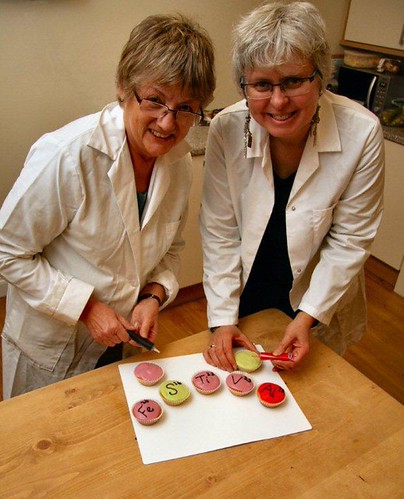
Stalls, demonstrations and great experiments to try out. Experience the inflatable Extraordinary Pod, make a smoothie on a bike then investigate your own mouth. Try making ice cream with liquid nitrogen, tackle the robot maze if you can or take the civil engineers’ challenge. Finally, enjoy an elemental cup cake as you pass the time of day with Joseph Priestly, discoverer of oxygen. Cakes, teas, coffees and lunch available in the café all day.
Small fee for some activities. Something for everyone.
If Stones Could Speak
Sat 19 Nov, 11am and 2pm
An Otley town centre walk starting at the Courthouse, led by Dr Sue Bowler. Find out about our natural world in an exploration of the geology around the local streets. Vast rivers, volcanoes, spectacular crystals, clear tropical oceans – it’s all in Otley
£2 Adults and young people.
How the Earth Made Us – Prof. Iain Stewart (SOLD OUT)
Sat 19 Nov, 7.30pm
Iain Stewart believes our planet’s restless actions have shaped everything from the evolution of the incredible diversity of life to the birth and development of human civilisation. He’ll show how, amid huge planetary upheaval – erupting volcanoes, clashing continents and rising mountains – some of the most crucial moments in Earth’s history have arisen out of apparently insignificant geological changes. The result is a remarkable celebration of the intricate and interconnected nature of planet Earth.
£7/£5 Adults and young people. Bar.
Further info and tickets:
Further information:
Tickets from www.otleycourthouse.org.uk
Box office 01943 467216 10am-4pm Mon-Sat inclusive
Buy in person from Otley Courthouse 10am-4pm Mon-Sat or on the door.
All events at:
Otley Courthouse Arts Centre,
Courthouse Street,
Otley,
West Yorks
LS21 3AN

We’ve got a great line up of enthusiasts so we’re expecting a really fun and inspiring evening. With ethics, the atmosphere and how chimps chat there’s something for everyone and everyone’s welcome! It doesn’t matter if you’re a beginner, an expert or still at school, aged 9 or 90 or anywhere in between, come along to the Science Café!
 Otley Science Festival is lucky enough to be one of the featured “Community Matters” organisations at Waitrose in Otley this month…